
Breast Cancer Radiation Therapy
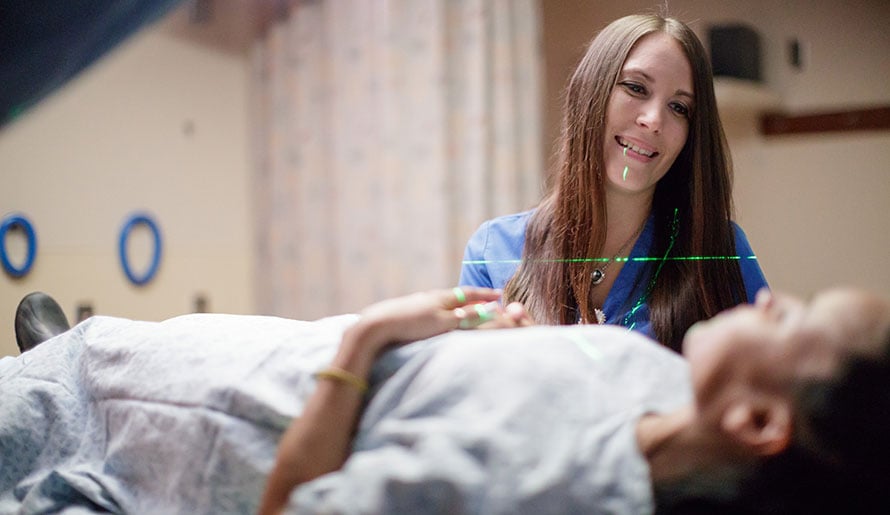
Each year in the United States, more than 300,000 women—and approximately 2,700 men—are diagnosed with breast cancer, making it one of the most common cancers overall. Because no two diagnoses are exactly alike, treatment is highly individualized based on factors such as the tumor’s stage and type and the patient’s general health and preferences.
Radiation therapy, also called radiotherapy, is a well-established and often effective treatment for breast cancer. It is frequently used after surgery to destroy any remaining microscopic cancer cells and help reduce the risk of recurrence. Radiation therapy may also be considered if surgery is not an option or if breast cancer has spread to other areas of the body.
-

300,000
American women receive a breast cancer diagnosis each year
-

2,700
American men receive a breast cancer diagnosis each year
What is radiation therapy for breast cancer?
Radiotherapy uses high-energy beams, such as X-rays or protons, to destroy cancer cells and shrink tumors. Unlike chemotherapy and other systemic treatments—which enter the bloodstream and circulate throughout the body to reach widespread cancer cells—radiation therapy is a localized treatment that precisely targets a specific, well-defined tumor site.
Some patients may receive more than one form of radiation therapy, depending on their diagnosis and overall treatment plan. The primary types used to treat breast cancer are:
External beam radiation therapy (EBRT)
EBRT is the most common type of radiation used to treat breast cancer. It uses an external machine (linear accelerator) to deliver targeted, high-energy X-rays to the whole breast or chest wall, or to the area where the tumor was surgically removed. Treatment is often given five days per week for several weeks, with breaks scheduled between sessions to allow healthy tissues time to recover.
Proton beam therapy is a specialized form of EBRT used in select cases and in clinical trials. Instead of using high-energy X-rays (photons), it uses protons—positively charged subatomic particles found in the nucleus of atoms—to deliver radiation to the tumor. Because protons can be more precisely controlled and deposit most of their energy directly at the tumor site, this approach may reduce radiation exposure to surrounding healthy tissues.
Internal radiation therapy (brachytherapy)
Brachytherapy places a small amount of radioactive material—sealed in tiny tubes, seeds or pellets—directly into the breast tissue near the area where the tumor was removed. By delivering radiation from inside the body, internal radiation therapy concentrates the dose in a targeted area, which can help limit exposure to nearby healthy tissues. It is sometimes used as part of accelerated partial breast irradiation (APBI), allowing treatment to be completed in a shorter timeframe than traditional EBRT.
 ACR Accredited Radiation Oncology Facility
The American College of Radiology gold seal accreditation recognizes Moffitt’s high level of image quality and safety, and the department’s excellence in the areas of equipment, medical personnel and quality assurance.
What to expect with radiation therapy for breast cancer
Radiotherapy is carefully planned to achieve maximum effectiveness while minimizing side effects. The healthcare team will create an individualized treatment plan tailored to the patient’s unique anatomy and cancer characteristics. The treatments are given on an outpatient basis, and most patients can continue many of their normal daily activities.
What happens during the initial appointment?
Typically, the patient’s first visit is a planning session, often called a simulation. During this appointment:
- Imaging studies, such as computed tomography (CT) scans, will be taken to map the treatment site.
- The radiation oncologist will determine the precise radiation delivery angles and dosage.
- Small “ink dot” tattoos may be placed on the patient’s skin to serve as reference points for accurate radiation beam alignment during treatment.
While the initial appointment does not involve radiation therapy itself, it is a critical step in ensuring safety and precision throughout the entire course of treatment.
What happens during radiation therapy for breast cancer?
During each EBRT session, the patient will lie comfortably on a treatment table while a linear accelerator rotates around their body to deliver highly targeted radiation beams to the treatment site. Including setup and positioning, each session will last about 15 to 30 minutes, although the radiation delivery itself usually takes only a few minutes. The procedure is painless, and the patient will not be radioactive afterward.

#1 Cancer Hospital in Florida
Moffitt is the top-ranked cancer hospital in Florida and the Southeast and ranked No. 15 in the nation in Newsweek’s “America’s Best Cancer Hospitals."
What are the potential benefits of radiation therapy for breast cancer?
Radiation therapy offers several important benefits, including:
- Reducing the risk of breast cancer recurrence
- Destroying microscopic cancer cells that may remain after surgery
- Supporting breast-conserving treatment after lumpectomy
- Relieving symptoms caused by metastatic cancer in advanced cases
For many patients, radiation therapy plays a key role in improving long-term outcomes and quality of life.
What are the possible risks and side effects of radiation therapy for breast cancer?
While radiotherapy can be highly effective for destroying cancer cells, it can sometimes affect healthy tissues near the treatment site. The side effects can vary based on radiation dosage, delivery technique and individual response. Throughout radiation therapy, the healthcare team will closely monitor the patient and adjust the treatment plan as needed.
Common side effects of radiation therapy for breast cancer
Short-term side effects of radiotherapy may include:
- Fatigue, which can range from mild to severe
- Skin changes, such as redness, dryness, itching or peeling in the treated area
- Breast swelling or tenderness
- Hair loss in the underarm or chest area
Most short-term side effects gradually improve within a few weeks after treatment ends.
Possible late-onset or long-term side effects of radiation therapy for breast cancer
Some patients experience side effects months or even years after completing radiation therapy. These may include:
- Changes in breast size, shape or skin color
- Fibrosis or hardening of the breast or underarm tissues
- Visible spider veins under the skin (telangiectasia)
- Lymphedema, particularly when lymph nodes are treated
Though rare, other possible long-term side effects of radiation therapy include damage to the heart, lungs or nerves in the treatment field, as well as weakened bones that may increase fracture risk.
Managing daily life during radiation therapy for breast cancer
Many patients are able to continue working and maintain their daily routine during radiation therapy. To manage any side effects, it may be helpful to:
- Apply a mild, fragrance-free moisturizer to the treated skin (as directed by the healthcare team)
- Avoid using hot water, harsh soaps and scented products in the treated area
- Avoid scrubbing the breast; instead, wash gently and pat dry
- Wear loose-fitting clothing and avoid underwire bras if irritation occurs
- Get adequate rest and stay well hydrated
The healthcare team can also provide personalized skincare recommendations, dietary guidance and strategies to help manage fatigue.
Follow-up care and monitoring after radiation therapy for breast cancer
Once radiation therapy is complete, the healthcare team will schedule regular follow-up visits to monitor healing, address any lingering side effects and watch for signs of recurrence. These appointments may include physical exams and periodic imaging to support the patient’s ongoing recovery and long-term health.
Benefit from world-class care at Moffitt Cancer Center
At Moffitt, radiation therapy for breast cancer is planned and delivered by a collaborative team of highly specialized radiation oncologists, medical physicists and radiation therapists. We use advanced techniques and technologies to improve precision, shorten treatment courses when appropriate and help minimize side effects.
Radiation therapy options at Moffitt include:
- Standard treatment – Typically delivered over five to six weeks, this approach uses three-dimensional conformal radiation therapy (3D CRT) or intensity-modulated radiation therapy (IMRT).
- Accelerated treatment – This option may be completed in one week or less through APBI using either EBRT or brachytherapy.
- Deep inspiration breath hold (DIBH) – This technique is often used for left-sided breast cancer to help reduce radiation exposure to the heart.
- Intraoperative treatment – INTRABEAM® intraoperative radiotherapy can be delivered as a one-day treatment during lumpectomy surgery. In the Tampa Bay area, it is available exclusively at Moffitt.
Our patients benefit from coordinated care that brings radiation therapy, surgery, chemotherapy and other treatments together in one location. Each treatment plan is tailored to the individual, with a singular goal of delivering the safest and most effective care possible.
If you would like to learn more about breast cancer radiation therapy at Moffitt, no referral is required. You can request an appointment with a specialist in our Don & Erika Wallace Comprehensive Breast Program by calling 1-888-663-3488 or submitting a new patient registration form online.
References
Breast Cancer Research Foundation – Breast Cancer Statistics
American Cancer Society – Breast Cancer Treatment Options
National Cancer Institute – External and Internal Radiation Therapies
Breast Cancer Now – Side Effects of Radiotherapy