
Non-Small Cell Lung Cancer Overview
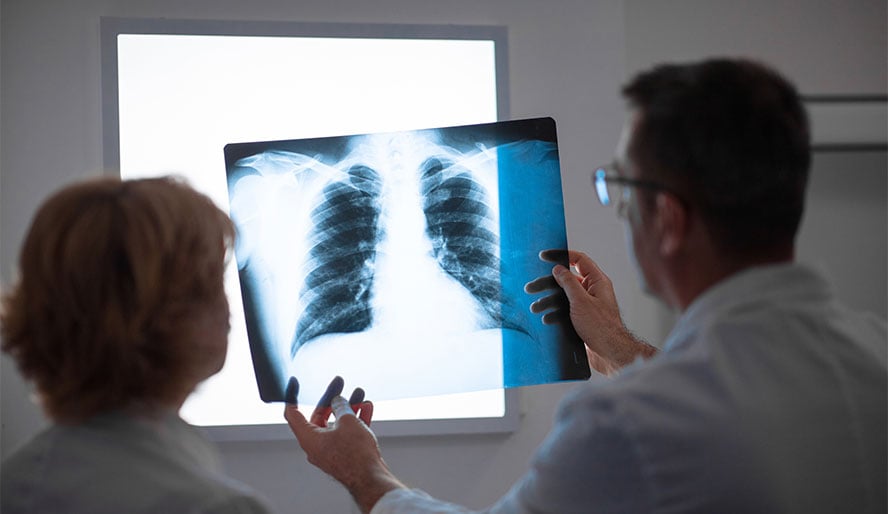
Non-small cell lung cancer (NSCLC) begins in the epithelial cells that line the airways and other structures in the lungs. NSCLC is the most common type of lung cancer, accounting for approximately 85% of all diagnoses.
Most lung cancers fall into one of two main categories—non-small cell or small cell—which are distinguished by how the cancer behaves and how the cells appear when viewed under a microscope. This classification can help guide treatment planning and may influence the therapies recommended for the patient.
What are the types of non-small cell lung cancer?
NSCLC has three main subtypes, which are determined by the type of epithelial cell in which the cancer began and where in the lungs it developed. This classification is important because each subtype can behave differently and may respond differently to treatment. A detailed diagnosis—often supported by specialized laboratory testing of tumor tissue—can help the healthcare team confirm the subtype and select the most appropriate therapy.
The subtypes of non-small cell lung cancer are:
Adenocarcinoma
Adenocarcinoma is the most common subtype of NSCLC. Typically, it begins in the mucus-producing cells in the outer areas of the lungs. Although it can affect anyone, it is more frequently diagnosed in women and individuals who have never smoked.
Because adenocarcinoma often develops in the outer lung tissues—away from the large central airways—these tumors may not cause early symptoms, such as persistent coughing or airway irritation. As a result, adenocarcinoma is sometimes discovered during an imaging test performed for an unrelated reason. Outcomes can vary from person to person, but when detected early, this subtype of NSCLC is often associated with a more favorable prognosis than more aggressive forms of lung cancer.
Squamous cell (epidermoid) carcinoma
As its name suggests, squamous cell carcinoma begins in the squamous cells that line the airways (bronchi), often developing in the central part of the lungs near the large breathing tubes. It is the second most common subtype of non-small cell lung cancer and is diagnosed more frequently in men than women, although it can occur in anyone. This subtype of NSCLC is often associated with a history of tobacco exposure.
Although squamous cell carcinoma may grow more slowly than some other lung cancers, it can still become serious if it spreads to nearby tissues or lymph nodes. In some cases, the tumor may outgrow its blood supply and develop a hollowed-out area (cavitation) within the affected portion of the lung. Because squamous cell tumors are often located close to airways, they may cause symptoms such as persistent coughing, wheezing, shortness of breath or coughing up blood, especially as the cancer progresses.
Large cell (undifferentiated) carcinoma
Large cell carcinoma is a rare subtype of NSCLC that can develop in different areas of the lungs. When viewed under a microscope, the cancer cells appear large and abnormal and do not have the typical features of mucus-producing cells (adenocarcinoma) or squamous cells (squamous cell carcinoma). Because this subtype is defined in part by what it is not, a detailed pathology review and specialized testing are often needed to confirm the diagnosis.
Large cell carcinoma is the least common of the three main NSCLC subtypes. In some cases, it can be more challenging to treat than other subtypes because it may grow and spread more quickly and therefore may be diagnosed at a more advanced stage. Treatment is individualized based on the stage of the tumor, the results of tumor testing and the patient’s overall health, which can help the healthcare team identify the therapies most likely to be effective.

"The doctor put me in a clinical trial and I’m still here, thanks to him and thanks to Moffitt."
Request an appointmentWhat causes non-small cell lung cancer?
The predominant cause of SCLC is exposure to certain carcinogenic chemicals found in tobacco smoke. In fact, the vast majority of affected individuals are current or former heavy smokers or have a history of chronic exposure to secondhand smoke.
While scientists have established that the carcinogens found in tobacco smoke can directly damage cellular DNA, it remains unclear how the damaged DNA leads to the development of cancer. Current research suggests that multiple genetic and environmental factors may be at play. For instance, certain genetic changes acquired during life, such as through exposure to tobacco smoke, may affect the oncogenes and tumor suppressor genes that normally regulate cell growth. An altered oncogene or tumor suppressor may promote very rapid and uncontrolled cell growth, leading to the development of cancer.
What are the risk factors for non-small cell lung cancer?
Many NSCLC cases are linked to a history of cigarette smoking or exposure to secondhand smoke. However, this type of lung cancer can also occur in people who have never smoked. Researchers have identified several environmental, occupational and health-related factors that may increase risk. These include:
Radon
Radon is a naturally occurring radioactive gas that can build up in homes and other indoor spaces, particularly in basements. Long-term radon exposure is a known cause of lung cancer, and the risk is higher when radon exposure is combined with smoking. Home radon testing can help identify elevated levels.
Workplace hazards
Certain occupational exposures can increase NSCLC risk, especially with repeated exposure over time. Harmful substances linked to lung cancer include:
- Asbestos
- Diesel exhaust
- Silica dust
- Industrial metals, such as arsenic, chromium, nickel and cadmium

#1 Cancer Hospital in Florida
Schedule an AppointmentWorkers in industries such as construction, manufacturing, mining and shipbuilding may be more likely to encounter these substances. Following workplace safety guidelines and using personal protective equipment can help reduce the risk.
Air pollution
Long-term exposure to air pollution—particularly fine particulate matter—is associated with an increased risk of lung cancer. This may be more relevant for individuals who live in areas with heavy traffic or industrial pollution.
Prior chest radiation and certain lung conditions
Radiation therapy delivered to the chest for a previous cancer may increase the risk of developing lung cancer later in life. In addition, some chronic lung diseases, including chronic obstructive pulmonary disease (COPD) and pulmonary fibrosis, have been linked to a higher risk of NSCLC. This may be related to long-term inflammation in the lungs and overlapping risk factors, such as smoking.
Genetics
A family history of lung cancer may increase the risk of NSCLC. Scientists believe the increased risk may be related to inherited traits, shared exposures (such as smoking) or both.
What are the symptoms of non-small cell lung cancer?
NSCLC typically does not cause noticeable symptoms in its early stages. When it does, possible warning signs include:
- A lingering cough, which may be dry or produce mucus or phlegm
- Shortness of breath
- Fatigue
- Vocal hoarseness
- Coughing up blood
- Chest pain that worsens with deep breathing
- Unexplained weight loss
Although a noncancerous condition is more likely to cause these symptoms than NSCLC, it is important to discuss any unusual changes with a physician. As with most cancers, an early diagnosis is the key to achieving the best possible outcome and quality of life.
How is non-small cell lung cancer diagnosed?
Only a biopsy can definitively diagnose NSCLC, but there are several steps that must be taken before a biopsy is ordered. If the patient is exhibiting possible signs of lung cancer, the physician will likely begin by performing a thorough physical examination and reviewing the patient’s medical history. If further information is needed, the physician may order imaging scans to obtain detailed pictures of the lungs. Commonly used imaging tools for diagnosing lung cancer include:
- Chest X-ray – Often the first imaging test performed, a chest X-ray can reveal abnormal masses, fluid buildup or other changes in the lungs that may require further evaluation.
- Computed tomography (CT) scan – CT provides detailed, cross-sectional images of the lungs and surrounding structures, which can help the physician identify the size, shape and location of any tumors and determine whether the cancer may have spread to nearby lymph nodes or other areas of the chest.
- Magnetic resonance imaging (MRI) scan – Using powerful magnetic fields and radio waves, MRI creates high-definition images, particularly of soft tissues, and may be used to evaluate whether lung cancer has spread to the brain or spinal cord.
- Positron emission tomography (PET) scan – Often combined with CT to assist with staging and treatment planning, PET uses a small amount of radioactive tracer to highlight areas of increased metabolic activity within the body, which may indicate cancer spread.
If imaging suggests lung cancer may be present, the physician will likely order a biopsy. This procedure involves removing a small sample of lung tissue or fluid for microscopic examination by a pathologist, who can identify cancer cells. Minimally invasive approaches to lung biopsy include:
- Fine needle aspiration (FNA) – Uses a thin, hollow needle to withdraw small samples of lung tissue
- Thoracentesis – Uses a hollow needle to remove fluid that has collected around the lungs
The physician will determine the most appropriate type of lung biopsy based on the patient’s age, symptoms and overall health.

Florida's Cancer Center of Excellence
Moffitt is a Cancer Center of Excellence by the state of Florida. The designation recognizes providers that exceed service standards and excel in providing quality, comprehensive and patient-coordinated care.
How is non-small cell lung cancer treated?
The ideal course of treatment for NSCLC can vary based on the cancer subtype, whether it has spread and other individual factors, such as the patient’s age and overall health. The main treatment approaches are surgery, chemotherapy, radiation therapy, targeted therapy and immunotherapy.
In some cases, NSCLC treatment begins with surgery to remove the tumor, a portion of the lung or the entire lung. Chemotherapy and radiation therapy may also be administered after or as an alternative to surgery to target cancer cells in the lungs or throughout the body. Chemotherapy is a systemic treatment that uses powerful cancer-fighting medications, which may be given intravenously or orally. Radiation therapy is a localized treatment that uses high-energy beams to destroy cancer cells in a specific area of the body.
Targeted therapy and immunotherapy are also promising treatment options for non-small cell lung cancer. Both are systemic therapies that use medications to disrupt cancer cell growth. Targeted therapy aims to interfere with the processes that promote the spread of cancer, such as blood vessel growth around tumors. Immunotherapy stimulates the body’s immune system to boost its natural ability to identify and attack cancer cells.
Benefit from world-class care at Moffitt Cancer Center
The multispecialty team in Moffitt’s renowned Thoracic Oncology Program offers the latest advances in lung cancer treatment. In a single location, our patients have access to medical oncologists, pulmonologists, thoracic surgeons, radiation oncologists, pathologists and multiple other specialists who focus exclusively on lung cancer. Working together, these experts develop an individualized treatment plan for each patient, which is continually refined as necessary to ensure the best possible outcome and quality of life.
Moffitt also spearheads a groundbreaking clinical trial program and ambitious research initiatives to improve lung cancer treatment options, as well as a comprehensive and convenient Lung Cancer Screening and Surveillance Program.
If you would like to learn more about non-small cell lung cancer, you can request an appointment with a specialist at Moffitt by calling 1-888-663-3488 or submitting a new patient registration form online. We do not require referrals.
Non-Small Cell Lung Cancer