
Salivary Gland Cancer Overview
Salivary gland cancer is a rare form of head and neck cancer that develops in the small organs responsible for producing saliva, which supports digestion, swallowing, speech and overall oral health. Salivary glands are located throughout the mouth and throat, with three major pairs situated near the ears (parotid glands), beneath the jaw (submandibular glands) and under the tongue (sublingual glands). Although cancer can arise in any salivary gland, it most commonly occurs in the parotid glands.
Salivary gland tumors may be benign (noncancerous) or cancerous (malignant). Cancerous tumors can vary significantly in how quickly they grow and spread. Some progress slowly over many years, while others are more aggressive and require prompt treatment.
How does salivary gland cancer start?
Salivary gland cancer begins when healthy cells develop genetic mutations that cause them to grow uncontrollably. Over time, the abnormal cells may form a tumor and invade nearby tissues. In some cases, cancer cells may also enter the bloodstream or lymphatic system and spread to distant parts of the body (metastasize).
What are the types of salivary gland cancer?
Salivary gland cancer is not a single disease but rather a group of cancers that can develop from different types of cells within the salivary glands. As a result, there are several distinct subtypes, each with its own characteristics, growth patterns and treatment considerations. Some types tend to grow slowly, while others may behave more aggressively.
Types of salivary gland cancer include:
- Acinic cell carcinoma – Most commonly originating in the parotid glands, acinic cell carcinoma is generally slow-growing and considered less aggressive than most other types of salivary gland cancer. When detected early, it is often highly treatable and associated with a favorable prognosis.
- Adenoid cystic carcinoma – A slow-growing but persistent cancer that often spreads along nerve pathways, adenoid cystic carcinoma usually progresses gradually but carries a heightened risk of recurrence and metastasis to distant areas of the body over time.
- Mucoepidermoid carcinoma – The most common type of salivary gland cancer, mucoepidermoid carcinoma can range from low-grade and slow-growing to high-grade and aggressive. It often develops in the parotid glands and may cause swelling, pain or facial weakness.
- Salivary duct carcinoma – A rare and aggressive form of salivary gland cancer, salivary duct carcinoma tends to spread quickly and often requires intensive treatment. When viewed under a microscope, the cells resemble certain types of breast cancer.

How common is salivary gland cancer?
Salivary gland cancer is relatively rare, accounting for only a small percentage of all head and neck cancers. According to the American Cancer Society, several thousand new cases are diagnosed in the United States each year. Because most salivary gland tumors are benign, salivary gland cancer occurs far less frequently than other head and neck cancers.
Although salivary gland cancer can develop at any age, it is diagnosed more frequently in older adults and affects slightly more men than women. The likelihood of developing certain types of salivary gland cancer can also vary depending on factors such as prior radiation exposure, occupational exposures and family history.
 Best Hospital in Tampa Bay
Voted "Best Hospital" in the Tampa Bay Times Best of the Best People's Choice Awards.
How does salivary gland cancer impact the body?
Salivary gland cancer can affect several important functions involving the mouth, face and throat. Depending on the size and location of the tumor, it may interfere with speaking, chewing, swallowing or facial movement. Some tumors develop close to nerves that control facial expression, which can lead to facial weakness, numbness or asymmetry. In more advanced cases, the cancer may spread to nearby lymph nodes or distant areas of the body, such as the bones or lungs, potentially causing additional symptoms and complications.
Treatment for salivary gland cancer may also affect oral function, saliva production and appearance, particularly when surgery or radiation therapy involves structures critical to speech, swallowing or facial symmetry. For this reason, comprehensive supportive care is an important part of treatment planning. Rehabilitation specialists, speech-language pathologists and other supportive care providers may work closely with the patient to help preserve function, manage side effects and support quality of life during and after treatment.
What is the prognosis for salivary gland cancer?
The prognosis for salivary gland cancer can vary widely depending on several factors, including:
- The specific type of salivary gland cancer
- The size, location and grade of the tumor
- Whether the cancer has spread to nearby lymph nodes or other parts of the body
- How completely the tumor can be removed
- The patient’s overall health and response to treatment
Many salivary gland cancers can be treated successfully, particularly when they are diagnosed at an early stage and remain confined to the salivary gland. Lower-grade tumors tend to grow more slowly and are often associated with a favorable outcome.
Although higher-grade or more advanced cancers may be more complex to treat, a combination of therapies—such as surgery, radiation therapy and systemic treatments—can often help control the disease and improve the outcome. Advances in imaging, surgical techniques and targeted therapies continue to enhance treatment effectiveness and quality of life for many patients.
 The Only Florida-based NCI-designated Comprehensive Cancer Center
Recognized for its scientific excellence, Moffitt is the only National Cancer Institute-designated Comprehensive Cancer Center based in Florida.
What are the causes and risk factors for salivary gland cancer?
The exact cause of salivary gland cancer is not fully understood. However, researchers have identified several factors that may increase the likelihood of developing the condition. Like many cancers, salivary gland cancer is thought to develop when genetic changes disrupt the normal cell life cycle, causing abnormal cells to grow uncontrollably and form a tumor.
Factors that may increase the risk include:
- Advanced age
- Exposure to environmental toxins, including air pollution and certain chemical solvents
- A family history of head and neck cancers or inherited cancer syndromes
- Occupational exposure to certain industrial substances, such as nickel alloy dust, silica dust and asbestos
- Prior radiation therapy delivered to the head or neck
- Tobacco use
Although these factors may increase the risk, many people diagnosed with salivary gland cancer have no known risk factors. In some cases, the condition develops without a clearly identifiable cause. Ongoing research continues to explore the genetic and environmental influences that may contribute to salivary gland cancer development.
Is salivary gland cancer preventable?
There is no guaranteed way to prevent salivary gland cancer. However, taking steps to support overall health and reduce exposure to known risk factors may help reduce the likelihood of developing certain cancers, including salivary gland cancer.
Potential preventive measures include:
- Avoiding tobacco products
- Limiting unnecessary radiation exposure when possible
- Maintaining regular medical and dental care
- Seeking a prompt medical evaluation for persistent symptoms involving the mouth, jaw, face or neck
- Using appropriate protective equipment when working with industrial chemicals or dust
Because salivary gland cancer can sometimes develop gradually with subtle symptoms, an early evaluation is important. Prompt attention to unusual changes—such as facial swelling, numbness, weakness or a lump—may support earlier diagnosis and improve the treatment outcome.
What are the signs and symptoms of salivary gland cancer?
Symptoms of salivary gland cancer can vary depending on the size, location and stage of the tumor. Some patients notice early warning signs, while others remain asymptomatic until the tumor grows and affects nearby tissues or nerves.
What are the early warning signs of salivary gland cancer?
The early signs of salivary gland cancer are often subtle and may develop gradually, making them easy to overlook or mistake for a less serious condition, such as a sinus infection. In many cases, the first noticeable symptom is a persistent lump or swelling near a salivary gland.
Early warning signs of salivary gland cancer can include:
- Difficulty opening the mouth fully or moving part of the face normally
- Numbness, tingling or weakness in part of the face
- A painless lump near the jaw, ear, mouth or neck
- Persistent discomfort or pressure in the mouth or jaw
- Swelling in the face, jaw or neck
Because these symptoms can also be associated with a benign condition, they do not necessarily indicate cancer. However, any persistent or unexplained changes should be evaluated by a healthcare professional to determine the cause and, if necessary, begin treatment as early as possible.
What are the most common symptoms of salivary gland cancer?
As the tumor grows, symptoms may become more noticeable and disruptive, such as:
- A persistent lump or swelling near the jaw, ear, mouth or neck
- Difficulty swallowing or opening the mouth widely
- Facial numbness or weakness
- Pain near the jaw or ear
- Speech changes
These symptoms can vary depending on which salivary gland is affected.
What are the signs of advanced salivary gland cancer?
Advanced salivary gland cancer may invade nearby tissues and nerves, leading to more severe symptoms, such as:
- Difficulty eating or speaking
- Enlarged lymph nodes in the neck
- Significant facial pain
- Facial paralysis
- Persistent mouth or throat pain
- Unexplained weight loss
What are the signs that salivary gland cancer has spread?
If salivary gland cancer enters the bloodstream or lymphatic system and metastasizes, symptoms may develop in other parts of the body. Depending on the metastasis site, possible signs include:
- Bone pain
- Fatigue
- Persistent cough
- Shortness of breath
- Significant weight loss
For certain salivary gland cancers, the lungs are among the most common sites of distant metastasis.

Florida's Cancer Center of Excellence
Moffitt is a Cancer Center of Excellence by the state of Florida. The designation recognizes providers that exceed service standards and excel in providing quality, comprehensive and patient-coordinated care.
How is salivary gland cancer diagnosed?
Diagnosing salivary gland cancer typically involves a combination of physical examination, imaging studies and tissue sampling. Based on the results, the physician can determine whether cancer is present and, if so, identify the tumor type and stage.
What laboratory tests can help detect salivary gland cancer?
While lab testing is not typically used to directly diagnose salivary gland cancer, it is often performed to evaluate the patient’s health and support treatment planning. Options may include:
- Blood work – Blood chemistry tests are designed to measure certain substances in the blood, such as electrolytes and minerals, which can help the physician evaluate the patient’s organ function and overall health status.
- Complete blood count (CBC) – A CBC measures the levels of red blood cells, white blood cells and platelets, which can help the physician identify abnormalities that could affect treatment planning.
- Liver function test – A hepatic panel is a group of blood tests that can help the physician assess how well the liver is working and determine whether cancer or its treatment may be affecting liver function.
- Kidney function test – This group of blood and urine tests can help the physician evaluate how well the kidneys are functioning, which is especially important before ordering certain imaging studies, chemotherapy treatments or medications.
What imaging tests are used to evaluate salivary gland cancer?
Imaging studies play an important role in diagnosing and staging salivary gland cancer. These tests can help the physician evaluate the size and exact location of the tumor, determine whether nearby structures are involved and assess whether the cancer has spread to lymph nodes or other parts of the body. Imaging can also help guide biopsy procedures and treatment planning.
Several imaging tests may be used to diagnose and assess salivary gland cancer, including:
- Computed tomography (CT) scan – Produces detailed cross-sectional images that can help the physician identify the size of the tumor, lymph node involvement and cancer spread to nearby structures
- Magnetic resonance imaging (MRI) – Provides highly detailed images of soft tissues, nerves and muscles, making it especially valuable for evaluating tumors near critical structures
- Positron emission tomography (PET) scan – Helps detect cancer activity throughout the body and may be used to evaluate whether the cancer has spread or recurred
- Ultrasound – Often used to evaluate lumps or masses in the salivary glands and surrounding tissues
- X-rays – Occasionally used to assess nearby bones or other affected areas
MRI and CT imaging are particularly important for evaluating soft tissues, nerves and lymph nodes in the head and neck region. In many cases, multiple imaging techniques are used together to provide a more complete understanding of the cancer and support the development of an individualized treatment plan.
What procedures are used to diagnose salivary gland cancer?
Procedures that obtain tissue samples are essential for confirming a diagnosis of salivary gland cancer. Common diagnostic procedures include:
- Fine needle aspiration biopsy – Using a thin needle, the physician will remove a small sample of cells from the suspicious area for laboratory analysis. This is often one of the first procedures used to evaluate a salivary gland mass.
- Core needle biopsy – The physician will use a larger needle to remove a small cylinder of abnormal tissue, which can provide more detailed information about the tumor type and grade than fine needle aspiration alone.
- Endoscopy – Using a thin, flexible tube equipped with a light and camera, the physician will examine structures in the throat and upper airway for signs of cancer spread or additional abnormalities.
- Surgical biopsy – The surgeon will remove part or all of the tumor so a pathologist can examine the tissue under a microscope and confirm the diagnosis.
How is salivary gland cancer treated?
Treatment for salivary gland cancer can vary depending on the type, location and stage of the tumor, as well as the patient’s overall health and treatment goals. Care may involve one or more therapies designed to remove or destroy the cancer while preserving important functions—such as speech, swallowing and facial movement—whenever possible. Many patients benefit from an individualized treatment plan developed by a multispecialty team with focused expertise in head and neck oncology.

ACS Surgical Quality Partner for 30+ Years
Continuously Accredited by the American College of Surgeons Commission on Cancer since 1989 for our commitment to providing comprehensive, high-quality and multispecialty patient-centered care.
Surgery for salivary gland cancer
Often a central component of treatment for salivary gland cancer, surgery may be used alone or in combination with radiation therapy or systemic therapies. The specific surgical approach can vary depending on several factors, including the type, size and location of the tumor and whether the cancer has spread to nearby tissues or lymph nodes.
Because the salivary glands are located near important nerves and structures involved in facial movement, speech and swallowing, surgical planning requires a high degree of precision. Whenever possible, the surgical team will work to preserve the facial nerves and maintain important functions while achieving complete cancer removal.
Common surgical procedures include:
- Partial removal of a salivary gland – The surgeon will remove the portion of the gland containing the tumor while preserving as much healthy tissue and normal function as possible.
- Complete removal of the affected gland – The surgeon may remove the entire salivary gland if the cancer is more extensive or involves multiple areas of the gland.
- Lymph node dissection – In addition to part or all of the affected salivary gland, the surgeon may remove nearby lymph nodes to determine whether the cancer has spread beyond the gland and guide further treatment decisions.
- Reconstructive surgery – Following tumor removal, reconstructive techniques may be used to restore appearance, facial symmetry and oral function. Depending on the extent of surgery, this may involve tissue grafts, nerve reconstruction or other advanced procedures.
Radiation therapy for salivary gland cancer
A common treatment for salivary gland cancer, radiation therapy is frequently used to destroy cancer cells that may remain after surgery and help reduce the likelihood of recurrence. In certain situations, it may also be used as the primary treatment, particularly when surgery could significantly affect nearby nerves or critical structures.
Modern radiation techniques are designed to deliver highly focused treatment while sparing surrounding healthy tissues from unnecessary radiation exposure. This is especially important when treating salivary gland cancer located in a sensitive area in the head or neck.
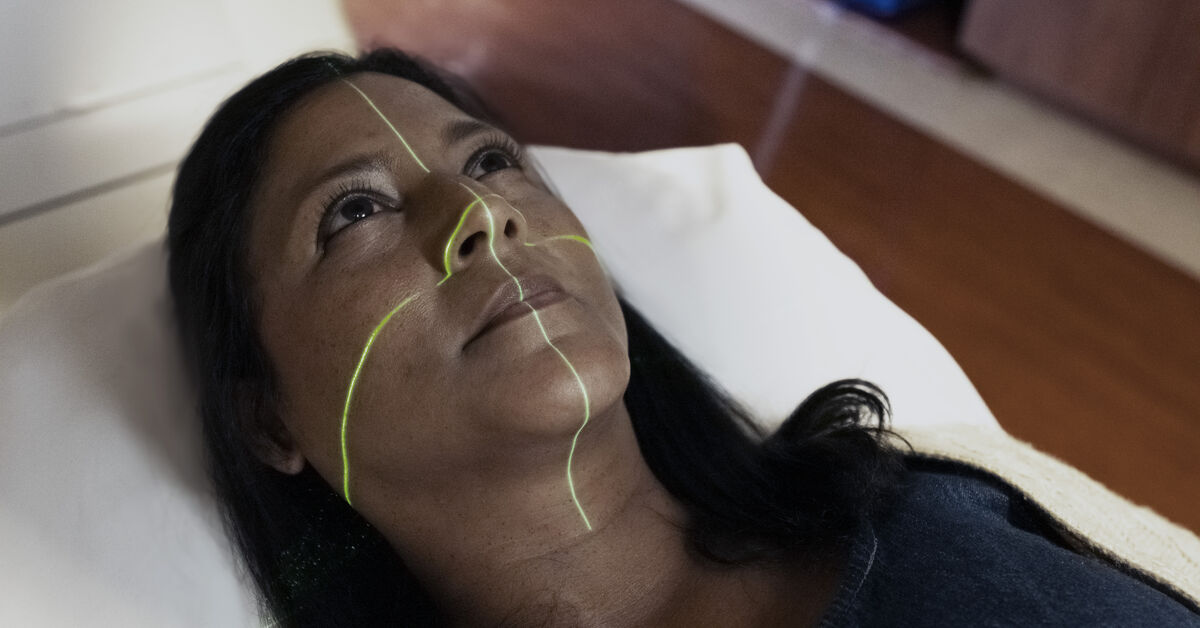
Types of radiation therapy for salivary gland cancer include:
- Image-guided radiation therapy (IGRT) – IGRT incorporates detailed imaging throughout treatment to verify tumor positioning and improve the accuracy of the radiation delivery during each session.
- Intensity-modulated radiation therapy (IMRT) – IMRT uses sophisticated treatment planning software to vary the intensity and angle of the radiation beams so they conform closely to the shape of the tumor.
- Proton therapy – Proton therapy is an advanced form of radiation treatment that uses positively charged proton particles to deliver radiation directly to the tumor while minimizing radiation exposure beyond the treatment site.
Proton therapy can play a particularly important role in treating salivary gland cancer, which often develops near highly sensitive structures involved in vision, hearing, swallowing, speech and facial movement. Unlike conventional X-ray beams, proton beams can be controlled to stop at a precise depth within the body, helping to reduce unnecessary radiation exposure to surrounding healthy tissues.
The heightened precision of proton therapy enables the physician to target the tumor more accurately while protecting nearby critical structures, such as the jaw, oral cavity, spinal cord and cranial nerves. As a result, proton therapy may help lower the risk of both short- and long-term treatment side effects, including dry mouth, swallowing difficulties and nerve-related complications. At the same time, it allows the physician to deliver a highly effective radiation dose directly to the tumor, supporting a strong treatment outcome while better preserving the patient’s quality of life both during and after treatment.
Chemotherapy for salivary gland cancer
Chemotherapy is a systemic treatment that uses powerful medications to destroy cancer cells throughout the body. Because the drugs travel through the bloodstream, they can target cancer cells that may have spread beyond the original tumor site. Chemotherapy may be recommended for advanced, recurrent or metastatic salivary gland cancer. In some cases, it may also be combined with radiation therapy to improve overall treatment effectiveness.
Common chemotherapy drugs for salivary gland cancer include:
- Cisplatin – A platinum-based chemotherapy drug, cisplatin damages the DNA of cancer cells, preventing them from growing and dividing. It is one of the most frequently used chemotherapy agents for head and neck cancers and is often administered alongside radiation therapy.
- Carboplatin – Another platinum-based chemotherapy medication, carboplatin may be used as an alternative to cisplatin if the patient has an underlying health condition, such as reduced kidney function, hearing loss or nerve-related concerns, which could make cisplatin less suitable. It works similarly by interfering with cancer cell DNA and may be used in combination with other therapies.
- Fluorouracil (5-FU) – This medication disrupts the ability of cancer cells to produce the DNA and RNA needed for growth and survival. It is commonly used as part of a combination chemotherapy regimen.
- Paclitaxel – Paclitaxel interferes with cancer cell division and may help slow or stop tumor growth. It is often used for advanced or recurrent salivary gland cancers, particularly in combination with other chemotherapy agents.
The specific chemotherapy regimen can vary depending on the type and stage of the tumor and the patient’s overall health and treatment goals. The treatment plan will be tailored to balance treatment effectiveness with side effect management and quality of life.
Targeted therapy and immunotherapy for salivary gland cancer
Targeted therapy and immunotherapy are advanced treatments that may benefit certain patients with recurrent, metastatic or difficult-to-treat salivary gland cancer. Unlike traditional chemotherapy, these therapies are designed to target certain biological characteristics of the cancer or enhance the body’s natural immune response against tumor cells.
More specifically, targeted therapy focuses on the genetic mutations, proteins or molecular pathways that help cancer cells grow and survive, while immunotherapy works by helping the immune system better recognize and attack cancer cells that might otherwise evade detection. These treatment approaches may be considered if tumor testing identifies specific biomarkers or genetic alterations that suggest the patient could benefit.
Ongoing research and clinical trials continue to expand the role of targeted therapy and immunotherapy in salivary gland cancer care, creating new treatment possibilities for patients with advanced disease.
Frequently asked questions (FAQs) about salivary gland cancer
The following FAQs-related article provides additional information about salivary gland cancer:
Benefit from world-class care at Moffitt Cancer Center
Patients diagnosed with salivary gland cancer can benefit from the expertise of the specialists in Moffitt’s renowned Head and Neck Oncology Program. As a National Cancer Institute (NCI)-designated Comprehensive Cancer Center, Moffitt is nationally recognized for excellence in cancer research and treatment. This distinction reflects our commitment to developing innovative therapies and delivering high-quality, evidence-based care.
At Moffitt, every patient receives individualized treatment recommendations from a multispecialty team that may include head and neck surgeons, radiation oncologists, medical oncologists, radiologists, pathologists and supportive care specialists. Working together, these specialists help each patient achieve the best possible treatment outcome while preserving speech, swallowing and facial function whenever possible.
Moffitt also offers access to advanced technologies and treatments, including proton therapy, minimally invasive surgical techniques and a robust portfolio of clinical trials evaluating promising new therapies for head and neck cancers. Because salivary gland cancer is rare and complex, receiving care from a group of specialists with extensive, focused experience is especially important.
If you would like to learn more about salivary gland cancer, you can request an appointment with a specialist in the Head and Neck Oncology Program at Moffitt by calling 1-888-663-3488 or submitting a new patient registration form online. We do not require referrals.