
Colon Cancer Stages
Understanding a colon cancer diagnosis can feel overwhelming, but knowing the stage of the cancer is one of the most important tools your care team has. The stage tells you how far the cancer has developed, which helps your doctors build a precise, highly effective treatment plan tailored specifically to you. While colon cancer usually develops slowly over many years from small, benign growths called polyps, finding it early means it is highly treatable, and in many cases, entirely curable.
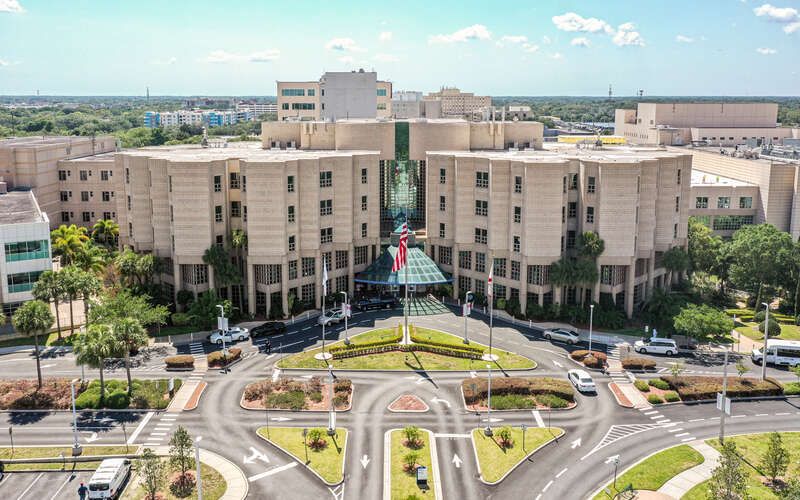
#1 Cancer Hospital in Tampa
Moffitt is the top-ranked cancer hospital in Tampa and central Florida and ranked No. 16 in the nation in Newsweek’s “America’s Best Cancer Hospitals."
How are colon cancer stages determined?
To determine the exact stage of colon cancer, a multidisciplinary team evaluates specific characteristics of the tumor. Doctors look at four key milestones to assign a stage from 0 to 4:
| Staging Milestone | What Doctors Look For |
| 1. Tumor Depth | How deeply the primary tumor has grown into the tissue layers of the colon wall. |
| 2. Tissue Invasion | Whether the tumor has broken completely through the colon wall into nearby organs. |
| 3. Lymph Nodes | Whether cancer cells have traveled into the local lymph nodes. |
| 4. Metastasis | Whether the cancer has spread to distant organs, most commonly the liver or lungs. |
Cellular Grading
Beyond the physical stage, pathologists examine the cells under a microscope to assign a grade. This measures how aggressive or abnormal the cells look compared to healthy tissue, helping predict how quickly the tumor might grow.
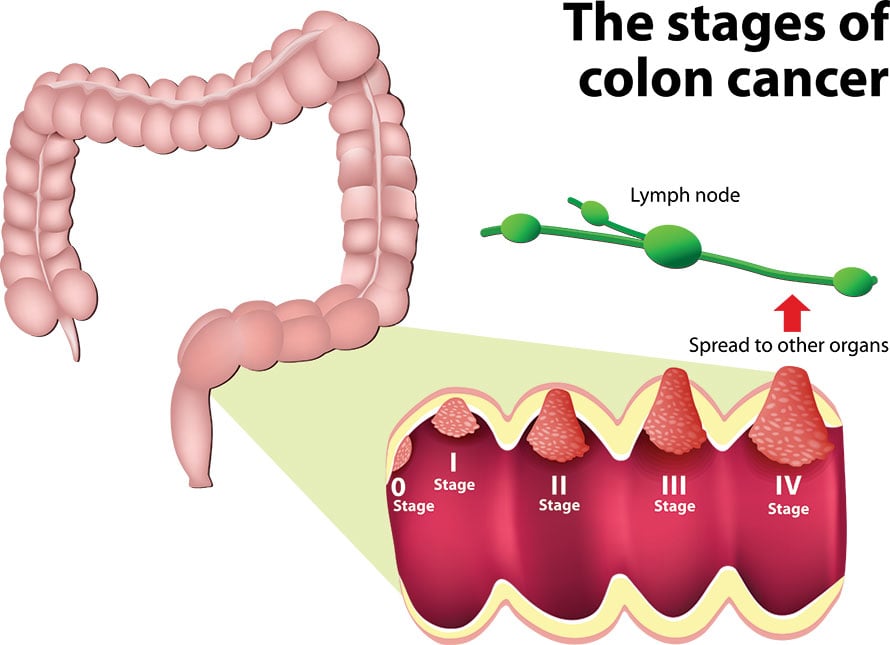
Stage 0 colon cancer
Also known as carcinoma in situ or intramucosal carcinoma, stage 0 colon cancer refers to cancerous cells that are confined to the innermost layer of the colon lining (mucosa) and have not invaded deeper layers of the colon wall, spread to nearby lymph nodes or metastasized to distant organs. At this early stage, the cancer is usually detected during a routine screening test, such as a colonoscopy or sigmoidoscopy, and it is considered highly treatable.
Treatment for stage 0 colon cancer often involves surgical removal of the cancerous tissue, which may be curative. Regular surveillance and follow-up care are typically recommended to monitor for any signs of recurrence.
Stage 1 colon cancer
Stage 1 colon cancer is characterized by the presence of cancerous cells that have invaded the inner layers of the colon wall but have not spread beyond the wall or into nearby lymph nodes or distant organs. At this early stage, the tumor is usually small, localized and highly treatable.
Treatment for stage 1 colon cancer usually involves surgical removal of the tumor and a slim margin of surrounding healthy tissue, which may be curative. Depending on the characteristics of the tumor and other factors, additional treatments such as chemotherapy or targeted therapy may be considered to reduce the risk of recurrence.
Stage 2 colon cancer
Stage 2 colon cancer is characterized by cancerous cells that have spread beyond the inner layers of the colon wall into the surrounding tissue but have not invaded nearby lymph nodes or distant organs. At this stage, the tumor is considered locally advanced, but it is still confined to the colon.
Treatment for stage 2 colon cancer typically involves surgical removal of the tumor and some surrounding healthy tissue, which may be curative. Depending on the type of tumor and other factors, additional treatments such as chemotherapy may be recommended to reduce the risk of recurrence. While the prognosis for stage 2 colon cancer is generally favorable, regular surveillance and follow-up care are important to monitor for any signs of recurrence.
 The Only Florida-based NCI-designated Comprehensive Cancer Center
Recognized for its scientific excellence, Moffitt is the only National Cancer Institute-designated Comprehensive Cancer Center based in Florida.
Stage 3 colon cancer
Stage 3 colon cancer is characterized by cancerous cells that have spread beyond the colon wall and into nearby lymph nodes but have not metastasized to distant organs. At this stage, the cancer is considered locally advanced.
The precise treatment approach for stage 3 colon cancer can vary depending on the size of the tumor, the extent of lymph node involvement and other factors. Typically, it involves surgical removal of the tumor and some nearby lymph nodes followed by chemotherapy to target any remaining cancer cells and reduce the risk of recurrence. Regular surveillance and follow-up care are essential to monitor for signs of cancer progression or recurrence.
Stage 4 colon cancer
Also known as metastatic colon cancer, stage 4 colon cancer is characterized by cancerous cells that have metastasized from the colon to distant organs or tissues. At this advanced stage, treatment focuses on managing symptoms, controlling cancer spread and enhancing quality of life.
Depending on the extent and location of cancer metastases, treatment options for stage 4 colon cancer may include surgery, chemotherapy, targeted therapy, immunotherapy and/or radiation therapy. Supportive care is also an important aspect of managing stage 4 colon cancer.
What is metastatic colon cancer?
Both metastatic colon cancer and stage 4 colon cancer refer to an advanced-stage tumor that developed in the colon and metastasized to distant organs or tissues. After entering the bloodstream or lymphatic system, colon cancer cells can potentially spread to any area of the body. However, the most common metastasis sites are the lungs, liver, brain, abdominal cavity lining (peritoneum) and distant lymph nodes.
Although early-stage colon cancer does not usually cause noticeable symptoms, more advanced colon cancer may cause:
- Changes in bowel habits
- Overwhelming fatigue
- Unexplained weight loss
Metastatic colon cancer can also cause symptoms in the affected area of the body, such as the:
- Lungs – Chronic coughing, difficulty breathing, shortness of breath and chest pain
- Liver – Jaundice, swelling in the arms and legs, abdominal bloating and nausea
- Brain – Headaches, confusion, memory loss and blurred vision
- Lymph nodes in the abdominal cavity – Loss of appetite and abdominal bloating
- Peritoneum – Abdominal pain, bloating, a persistent feeling of fullness, unexpected weight gain and nausea
Benefit from world-class care at Moffitt Cancer Center
If you would like additional information about colon cancer stages, you can request an appointment with a specialist in Moffitt’s renowned Gastrointestinal Oncology Program by calling 1-888-663-3488 or submitting a new patient registration form online. We do not require referrals.
Diagnosis